Super Cub Bush Planes
To many people, the Super Cub is the first image that comes to mind when the subject of bush flying is mentioned. Small and rugged, the Super Cub easily handles impossibly short landing areas and its rugged construction makes it a natural for rough fields hewn with rocks. It can easily be fitted with floats, skis or tundra tires.
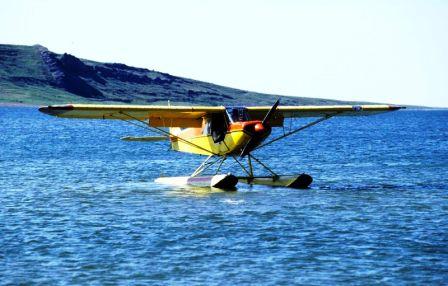
Originally manufactured by Piper as the PA-18, the Super Cub was an advanced model of the J-3 Cub. Unlike the J-3 Cub, the Super Cub featured a strengthened airframe, a more powerful engine and wing flaps. Engine power ranged from 90 to 180 horsepower with the Lycoming 0-320 and 0-360 (150 hp and 180 hp respectively) being the engines of choice for many Super Cub owners and pilots.
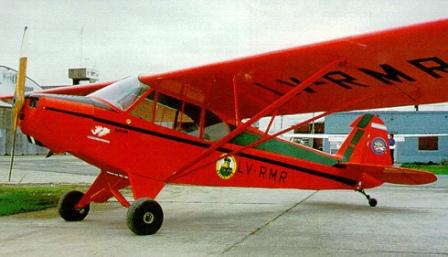
Piper ceased production of the Super Cub in 1991 but Cub Crafters of Washington still manufacturers the airplane to this day. In addition to Cub Crafters, there are approximately 10 different “kits” of the Super Cub offered by various companies for people who are willing to build their own Super Cub.
In addition to kits, Super Cub projects are available (some of which are even sold over the internet) and many current Super Cubs are restored versions of older Super Cubs. Super Cubs can be purchased as licensed aircraft or experimental if one chooses to build his or her own Super Cub.
In addition to the airframe itself, many companies offer modifications for the Super Cub. Popular modifications include larger climb props, extended landing gear struts and modified wingtips. Externally mounted baggage and fuel tanks are available. Several companies offer wider fuselages that offer more interior room.
Less common modifications include clipped wings or slotted wings. “Alaska Cub mods” is often advertised when people are selling their Super Cub and refers to airplanes that have been modified for the cold and sometimes brutal conditions experienced in Alaska. Although the phrase is not precise, popular “Alaska mods” include powerful cabin heaters, insulation, a climb propeller and extended landing gear struts. Super Cubs can be found with only rudimentary flight instruments and no avionics to ones that are certified for instrument flying.
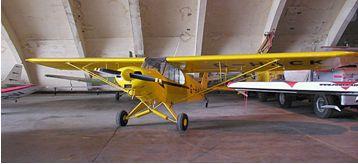
In terms of performance, the Super Cub easily hauls two people and will generally cruise between 90 and 100 mph (or 70 to 80 mph with floats or some varieties of tundra tires). Because the Super Cub is a relatively “draggy” airframe there is no practical way to make the airplane fly faster. Some Super Cubs have been mounted with 260 hp engines, but cruise speeds in these aircraft barely exceeds 100 mph. With such large and heavy engines, payload and range suffer immensely and make these airplanes practical for only very short distance flying.
Flying a Super Cub is considered by most pilots to be a pure joy. The controls are light and well harmonized for an aircraft of this type. Pilots new to taildraggers generally find the rudder to be quite a bit heavier and more authoritative than in other planes, but most soon become accustomed to this. Super Cubs equipped with floats will generally yaw more than non-float equipped planes. Take-offs are generally thrilling for even experienced Super Cub pilots as Cubs quickly become airborne in very short distances. Vertical take-offs are theoretically possible if the pilot is able to take-off into a sufficient headwind. Depending upon exact wing and modifications, some Cubs are able to fly around speeds as low as 35 mph.
Construction of the Super Cub is traditional welded 4130 Steel tubing for the fuselage and aluminum spars and ribs for the wings. Super Cubs are covered with fabric. Such construction makes the Cub easy to repair in remote areas with tools that are typically available in such areas (such as welders). Other bush planes of more modern construction exist but easy field repair of semi-monocoque or composite is questionable in the minds of some bush pilots.
This next Piper Super Cub shows off its STOL power in 18 feet. The video is only 4 seconds long but definitely worth a go!
Here is a Cub with tundra tires showing off his STOL power.
Watch this Super Cub do a snow landing with bushwheels under a brilliant blue Alaska sky.
The next video is a brief description of a 1982 PA-18 from the owner who describes it as having all the Alaska mods and shows pictures of the matching floats and skis with a an extended cargo capacity in which he once hauled home a caribou. The best part is, after the brief description is some talented videography featuring close-ups of the Super Cub flying through some beautiful Alaskan skyline with the snow covered mountains in the background.
For the advanced mountain pilot, here is a Super Cup video with a bouncing, up-hill landing and a dramatic short take off roll.
Are you a Super Cub Fan?
Do you have a t-shirt, ball-cap, key chain, coffee cup, wind chime, picture book or other knick-knack emblazoned with the iconic image of the Super Cub? If so, you are an honorary member of the Super Cub Fan Club.
We've had so many emails from folks ranting and raving about the Super Cub, it seemed appropriate to set up a virtual fan club so the folks at home could wax poetic about the Super Cub. If I remember to charge up my camera battery I'll take a picture of the Super Cub wind chime my wife gave me for Christmas and post it on the website.
Its going to take me awhile to post all the comments we've received so please bear with me while I get into the virtual fan mail bag....
It looks like we owe a belated Happy Halloween to Bob Hoffman from the United States. Seems Bob was too senior in years to go trick or treating so instead he surfed through the bush-planes.com website and had some interesting comments. Before getting to those comments though, its interesting to note that Bob is what we would call a "hardcore" aviator. "I was a military pilot with about 30 months flying helicopters in Vietnam. I also was a military fixed wing pilot. I also flew in Alaska, fixed wing, for several years and flew both fixed wing and helicopters in Washington state." Bob has been a commercial fixed wing and helicopter pilot for the past 43 years.
Bob, I'm sorry I was not here to e-chat with you on Halloween as you seem like you've got some fascinating flying stories, and, since I've been to Alaska the past six years in a row I'm wondering if we've crossed passed either at Lake Hood or on post.
So what is Bob's best bush plane? "It really depends on the mission. Tell me the mission and I'll tell you the best airplane. I've flown Supercubs, Helio Couriers, 206s, 185s, Caravans, and Islanders as well as UH-1s, 500s, 12Es, 300s, and 47s. The best bush plane is the one that will get the job done as efficiently and effectively as possible."
Now let's see, here is one from Rob Rambaud from the United States who has been flying for 35 years. Rob says the best bush plane is, "Don't know - Super Cub or DeHavilland Beaver," and his dream plane is "D17 Stearman, Extra 300L, Pitts S2C, Lancair 4P" Obviously Rob is a bit of a kid in a candy store, so to speak.
Alex, from Romania, who has been flying gliders and small planes for about three years says his dream plane is the Super Cub, though he believes the best bush plane is the STOL ch 701. Okay, fair enough so far - now this next bit is where Alex throws me for a loop - he poses this question:
Bush flying legislation. I mean can you land your cessna anywhere you want and the aviation authority is OK with that? Specifically in the remote regions like Africa. (DRC for instance). I've heard that landing off airport is Ok for ultralights (LSA in USA) only, but I cannot find anything on the net about that. Maybe you can help?
If anyone would like to answer Alex's question, please do so here. I cannot speculate what happens on the African continent but I'm sure at least one of the readers can help. Hopefully.
Now, before we get back to the Super Cub, I'm going to go off track just a bit, simply because I think some people will find it helpful. Dan from Zimbabwe wrote in to tell us he is not a pilot and he doesn't know what the best bush plane is but his dream plane is a jet and he came to this website looking for instructions on how to fly. Slightly out of place but still a perfectly valid question. I would refer him to the start flying page at the AOPA website. Mind you, I don't know how helpful this will be to someone on the African continent so readers, if you can help Dan, please send your words of wisdom here. Hopefully, Dan, we can find you a mentor and get you on the right track.
Just a little update on Dan's request. Someone has been kind enough to let us know that Africa has what is considered to be the first and only genuine Bush Pilot school and they suggest you look into it further at www.bushair.co.za. We checked on this and it turns out it's called Bush Air and it's located at the Barber Airport (FABR) in Lowveld, South Africa. It actually looks pretty cool and now I want to go there in person! Now, in fairness, we have to disclose that this referral came directly from the flight instructor. His name is CC and he specializes in extreme bush and mountain flying. He has been flying over 20 years and although his dream plane is a Pilatus Porter he owns a T41 with big tires. (For those unaware, the T41 is a Cessna Mescalero which is a military version of the 172.)
Okay, before we lose the narritive thread - lets get back to the Super Cub....
Randy Boggs from the U.S. wrote in to tell us the Piper Super Cub is both his dream plane and the best bush plane. He is also partial to the Cessna 172 and the Cessna 185. He also says he loves bush-planes.com and will visit often as he especially likes watching the videos of the planes landing in the bush. Thanks Randy - we appreciate the compliment.
We just received word from James Minifie of Canada who flies a Bushmaster (Husky Norseman). James says his dream plane is, "A big, over-powered, Super Cub on fat Tundra tires." Even though he's only been flying for two years he had some strong opinions about which plane is the best bush plane, "Too hard to say. Depends what you need it for and how many people you want to be able to put into it. In a 2-seater, land anywhere machine it has to be the Super Cub. For movin fuel, people, gear, etc.....you gotta have a Beaver or Turbo 206." Seems like a reasonable answer. James couldn't leave well enough alone, he had to throw in this comment: "Maybe these two planes are in your list and I just can't find them but you have to include the DreamAircraft Tundra (4-place) and Found Aircraft Bush Hawk (now Expedition E350). Two more great Canadian designed and built bush-planes."
Thanks James, we appreciate the input and do eventually add new planes based on reader requests so I'll put it on the list of things to maybe some day get around to. If anyone else has a plane they'd like to see featured on this website, please let us know here. So, just a couple of comments in response to James' post. First off - Canadians make great bush planes. (Go Canada!) Second, it will take more than one vote from one reader to get a plane featured on this site, so if the rest of ya'll agree with James, say so and if you disagree - say so. This is where you go to do that.
Okay, before we turn back to the Super Cub, and since we are on the RA RA Canada theme - I will politely ask all Canadian aviators to see the post about the Canandian aviation television show which is featured on the Beaver page, if you are interested in maybe getting on television. Thought maybe some of you folks would appreciate an opportunity to show off. Or maybe you'd rather be flying your Super Cub....
Michael Berger from the United States who used to be a pilot tells us the best bush plane, in his opinion, is the Super Cub. When asked his dream plane, he says, "DC-3, Piper Cub, C-130." Something tells me Michael has spent some time at Elmendorf AFB. Any other Elmendorf graduates out there? Give us a shout out here. (Let's RA RA the USA even though some of us have had it up to our eyeballs with all the politics and government baloney and you name it, we're sick of it, but RA RA USA anyway!)
Turns out I'm getting called into a meeting (perhaps I was excercising my constitutional rights a little too fervently). So the rest of you will have some time to send in some poignant remarks about the Super Cub. :P
LATEST NEWS FLASH: The crew is headed off to another continent for more bush plane news, pictures and videos. More on that later.... (Some meetings aren't so bad after all.)
Francisco Andre, who has been a professional pilot for ten years, wrote in from Portugal to tell us his dream plane, "What is your dream plane? Not a bush plane: Mooney Ovation. Bush plane: The Mighty Piper SuperCub!!" Despite his dreams, Francisco also said he thinks the best bush plane is the Maule.
Now here at bush-planes.com we have a lot of opinions about a lot of things that we don't mind sharing. That being said, most of us love, love, love the Super Cub and I've been told someone is going to get their nose out of joint over this but .... Some of us think the rudder is too small. Anybody else have an opinion about rudders or Super Cubs in general? Please let us know here.
 Blink
Blink Del.icio.us
 Digg
Digg Furl
Furl Google
 Simpy
Simpy Spurl
Spurl Technorati
 Y! MyWeb