Murphy Moose
When the Murphy Moose was introduced, a collective gasp went up from the bush pilot community. It looked like a deHavilland Beaver. It had the radial engine sound of the deHavilland Beaver and it performed similarly to the Beaver — that’s right, the Beaver, the holy grail airplane of the bush flying community.
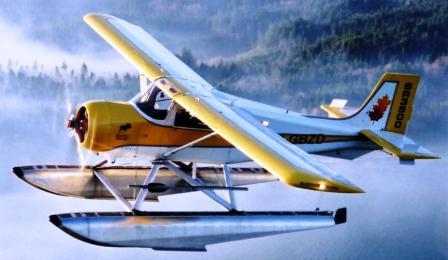
While not as large as the deHavilland Beaver, the Murphy Moose is often compared to the Beaver and for many, the Moose is a viable alternative to the expensive Beaver. It is powered by a nine cylinder Russian M-14P radial engine that is supercharged and produces 360 hp. Models are available with a Lycoming in-line six cylinder engine that produces 260 hp. The Murphy Moose seats six people.
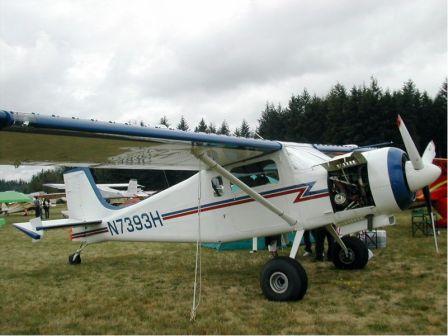
The only catch offered by the Murphy Moose over the deHavilland Beaver is that it is an experimental airplane, thus it is assembled by homebuilders. It is not offered in a certified, factory built version. If one does not want to tackle building a Moose, then one is limited to buying one already built by someone else. While there is nothing inherently wrong with amateur built aircraft, one is well advised not to wander into this arena without quite a bit of knowledge about the builder and the way in which they built the aircraft.
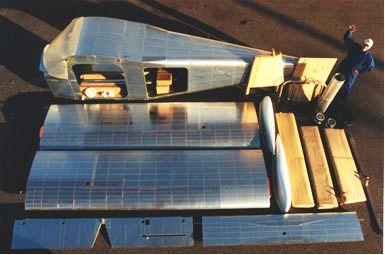
To allay some of the fears of potential homebuilders, the Moose is offered in a "quick build" kit that comes largely already assembled. Although some serious construction work is still needed before the plane can fly, the quick-build kit certainly makes the prospect of Moose building less daunting.
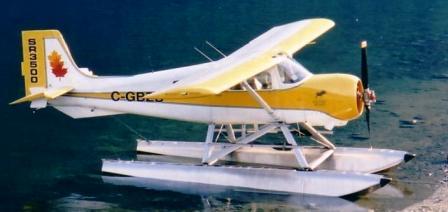
The estimated build time for the Murphy Moose is 3,500 hours with an estimated cost of $150,000 United States dollars. The Moose kit estimate includes: basic kit, new radial engine and propeller, engine mount & cowl, crating, 80 USG fuel tanks, internal access door, standard seats, opening side windows, fuselage side windows, stab fairing, pitot tube, Whelen NAV/strobe lights, landing light, and the following allowances for: interior finishing - $5,000, painting - $5,000., avionics - $15,000.
Moose kits are manufactured by Murphy Air in British Columbia. They proudly proclaim the Moose to be the SUV of the sky due to its increased cargo capacity.
Here at bush-planes.com our Rudder Snob had this to say, "The Moose has the most efficient rudder of all the bush planes." Folks, this guy is not generous with his endorsements so take that for what it's worth.
Does anybody else have an opinion about the Moose? Let us know here.
Watch the Murphy Moose take off from a lake in Ontario, Canada.
Moose kits are manufactured by Murphy Air in British Columbia. They proudly proclaim the Moose to be the SUV of the sky due to its increased cargo capacity.
This next video is the first start of a Murphy Moose with a hand propped start of a M14 Russian Radial engine.
 Blink
Blink Del.icio.us
 Digg
Digg Furl
Furl Google
 Simpy
Simpy Spurl
Spurl Technorati
 Y! MyWeb